
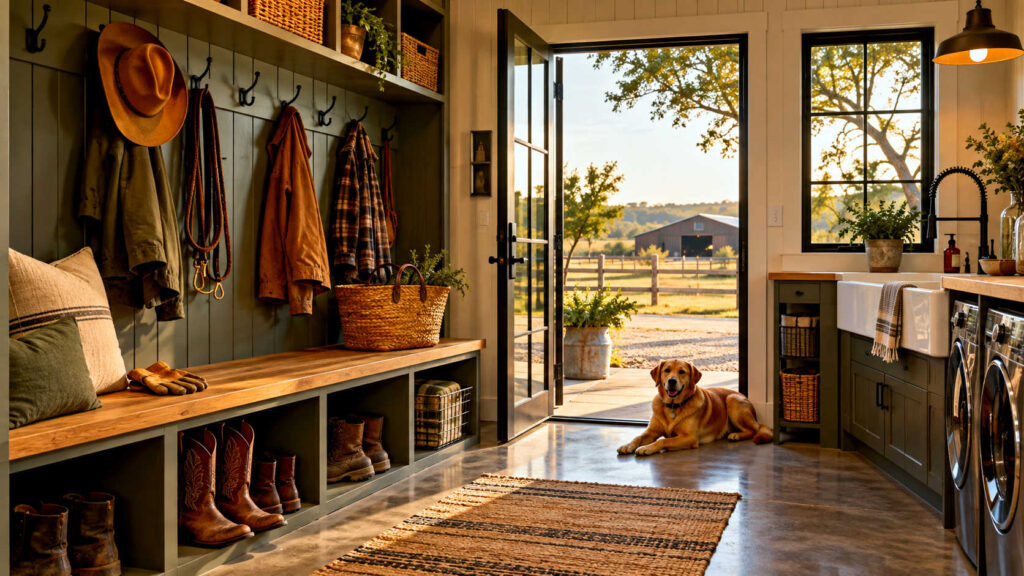
Living in the country comes with plenty of perks: more space, open views, room for animals, outdoor projects, and a little more breathing room.
It can also mean muddy boots, dusty clothes, wet dogs, work gear, jackets, tools, and everything else that tends to follow you inside.
That is where a well-designed mudroom can make a big difference.
For a barndominium, a mudroom is more than a place to kick off your shoes. It can serve as a practical transition space between the outdoors and the main living areas of the home. With the right layout, storage, and materials, it can help keep the rest of the house cleaner and make every day routines much easier.
Why a Mudroom Makes Sense in a Barndominium
Barndominiums are often built on larger properties where homeowners spend more time outdoors than they might in a traditional neighborhood.
You may be coming inside after working in the shop, feeding animals, mowing acreage, gardening, working on equipment, or simply dealing with a rainy day on a dirt or gravel driveway.
Without a designated place to stop, all of that dirt and gear can quickly end up in the kitchen, living room, or hallway.
A mudroom creates a buffer zone.
It gives everyone a place to remove boots, hang coats, drop bags, store outdoor equipment, and clean up before entering the main part of the home.
For families, it can also prevent the main entryway from becoming a collection point for backpacks, shoes, jackets, sports equipment, and everyday clutter.
Choose the Right Location
One of the first decisions is determining where the mudroom should be located.
In most barndominiums, the best location is near the entrance that will actually be used every day.
That may not be the front door.
If your family typically enters through an attached garage, shop, carport, or side door, placing the mudroom near that entrance usually makes the most sense.
A rear entry can also work well for homes where people frequently move between the house and backyard, barn, pasture, garden, or outdoor entertaining space.
The key is to design around your real routine.
A beautiful mudroom near an entrance nobody uses will not be nearly as useful as a simple, well-planned space positioned where everyone naturally comes and goes.
Build in a Place to Sit
A bench may seem like a small feature, but it can be one of the most useful parts of a mudroom.
It provides a comfortable place to sit while taking off muddy boots, changing shoes, or helping children get ready to head outside.
A built-in bench can also create additional storage.
Drawers or cabinets underneath can hold shoes, pet supplies, outdoor accessories, or seasonal items. Open cubbies make frequently used footwear easy to grab.
If space is limited, even a narrow bench can add a lot of function without taking over the room.
Give Everything a Home
The best mudrooms are designed around what needs to be stored.
Hooks are useful for jackets, hats, backpacks, purses, and work clothes. Open cubbies can give each family member a dedicated space. Closed cabinets can hide items that do not need to be on display.
Think about the things that regularly come through the door.
That may include:
Work boots
Cowboy boots
Rain gear
Coats and jackets
Gloves and hats
Backpacks
Pet leashes
Flashlights
Work gloves
Sports equipment
Reusable grocery bags
Outdoor tools
Animal supplies
The more intentionally these items are planned for, the less likely they are to spread throughout the rest of the house.
Pick Flooring That Can Handle Country Life
A mudroom floor needs to be able to take some abuse.
This probably is not the place for a delicate flooring material that requires constant maintenance.
Durable options such as tile, sealed concrete, luxury vinyl plank, or other water-resistant materials can work well because they are easier to clean when dirt and moisture are tracked inside.
Sealed concrete can be especially attractive in a barndominium because it can complement the practical, industrial feel of the home while standing up well to heavy use.
Whatever material you choose, consider how it will perform when covered with wet boots, dirt, pet hair, or mud.
Ease of cleaning should be a major part of the decision.
Consider a Utility Sink
If you have enough space, a utility sink can turn a basic mudroom into a much more functional work area.
It can be useful for washing muddy hands, rinsing tools, cleaning pet bowls, soaking dirty clothing, or handling messes you would rather keep away from the kitchen sink.
For families with pets, acreage, livestock, gardens, or outdoor hobbies, this can become one of the most frequently used features in the room.
A deep sink is usually more practical than a shallow decorative one.
Combine the Mudroom and Laundry Room
One of the smartest ways to use space in a barndominium is to combine the mudroom and laundry room.
Dirty clothes and workwear can go directly into the washer instead of being carried through the house.
This arrangement can be especially convenient if someone frequently comes inside wearing dusty, muddy, or heavily soiled clothing.
A combined space may include a washer and dryer, laundry sink, folding counter, hanging rod, cabinets, bench, hooks, and shoe storage.
The challenge is making sure the room does not become overcrowded.
If both functions will share one room, allow enough space for people to enter the house without interfering with someone doing laundry.
Think About Pets
Country homes and pets often go hand in hand, so it can be helpful to plan for them from the beginning.
A mudroom can include a dedicated place for food containers, leashes, towels, grooming supplies, and pet medications.
Some homeowners may even want to include a dog washing station.
This can be particularly useful for larger dogs or pets that spend a lot of time outdoors.
Instead of trying to clean muddy paws in the bathtub, a low washing area near the exterior entrance allows the mess to stay close to the door.
Even without a full wash station, keeping towels and pet supplies in the mudroom can make everyday cleanup much easier.
Add Storage for Outdoor and Work Gear
A country property often comes with equipment that does not fit neatly into traditional household storage.
You may have insulated coveralls, work gloves, riding gear, hunting clothes, farm supplies, gardening equipment, or other outdoor necessities.
A taller cabinet or locker-style storage area can help keep these larger items organized.
If your mudroom connects directly to a shop or garage, it may also make sense to create separate storage zones.
Dirty or heavy work equipment can remain closer to the shop side, while coats, shoes, and household items stay closer to the home.
That separation can help keep the mudroom from becoming another version of the garage.
Do Not Forget Counter Space
A small countertop can be surprisingly useful in a mudroom.
It gives you a place to set down groceries, packages, keys, bags, mail, or items that need to go back outside.
If the room includes laundry appliances, a countertop can also double as a folding area.
Just be careful about creating too much open counter space without storage.
Flat surfaces have a habit of becoming clutter magnets.
Adding drawers, cabinets, baskets, or designated storage nearby can help keep the counter useful.
Plan for Texas Weather
A mudroom should work throughout the year.
In Texas, that can mean dealing with heat, dust, rain, wind, sudden temperature changes, and the occasional muddy stretch after a storm.
Good ventilation can help wet clothing and boots dry more quickly.
A durable floor mat or boot tray near the entrance can catch dirt before it spreads farther into the room.
If the mudroom has an exterior door, good insulation and weather sealing are also important, especially if the room sits between the living area and an attached shop or garage.
The goal is to create a functional transition space without creating an uncomfortable hot or cold zone inside the home.
Make the Room Easy to Clean
Mudrooms get dirty. That is part of the job.
The easier the room is to clean, the better it will function over time.
Consider washable wall finishes, durable trim, easy-to-clean flooring, and cabinetry that can handle everyday wear.
You may also want to avoid creating too many small gaps or hard-to-reach spaces where dirt and pet hair can collect.
A simple layout with durable finishes can often outperform a more decorative design when it comes to everyday country living.
Design Around Your Family’s Routine
There is no single perfect mudroom layout.
A family with young children will have different needs than a couple living on acreage. Someone who works outside every day may need more boot and workwear storage. A family with several dogs may prioritize a wash station. Someone with an attached workshop may want the room to function almost like a small changing area.
Before finalizing the floor plan, think through what happens when you arrive home.
Where do your shoes go?
Where do you set your keys?
Where do the kids leave their backpacks?
Where do dirty clothes go?
Where does the dog’s leash live?
Where do you put wet jackets?
Where do you clean up after working outside?
Those everyday questions often reveal exactly what the mudroom needs.
A Small Room That Can Make a Big Difference
A mudroom may not be the most glamorous room in a barndominium, but it can easily become one of the most useful.
When it is placed in the right location and designed around real daily routines, it helps protect the main living areas from dirt and clutter while giving everything a dedicated place.
The best mudrooms are not necessarily the biggest or most elaborate.
They are the ones that make coming home easier.
Whether that means a simple bench and row of hooks or a larger space with laundry, storage, a utility sink, and a pet washing station, planning the mudroom during the design phase gives you the opportunity to create an entryway that truly fits country living.
Ready to Build a Barndominium That Fits Your Lifestyle?
A well-designed barndominium should work for the way you live every day. From practical mudrooms and storage areas to open living spaces, workshops, and custom features, thoughtful planning can make your home more comfortable and functional for years to come.
If you are ready to start planning your own barndominium, Barndominiums in Texas can help bring your ideas together and create a home designed around your property, lifestyle, and goals.
Call 833-886-6355 or contact Barndominiums in Texas today to get started.